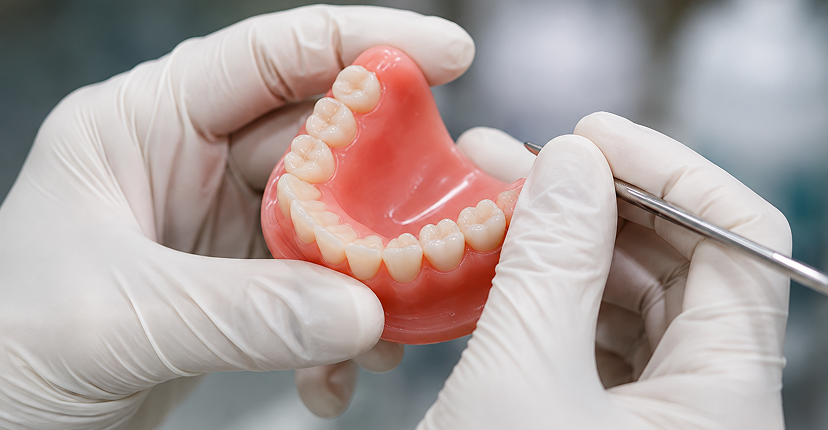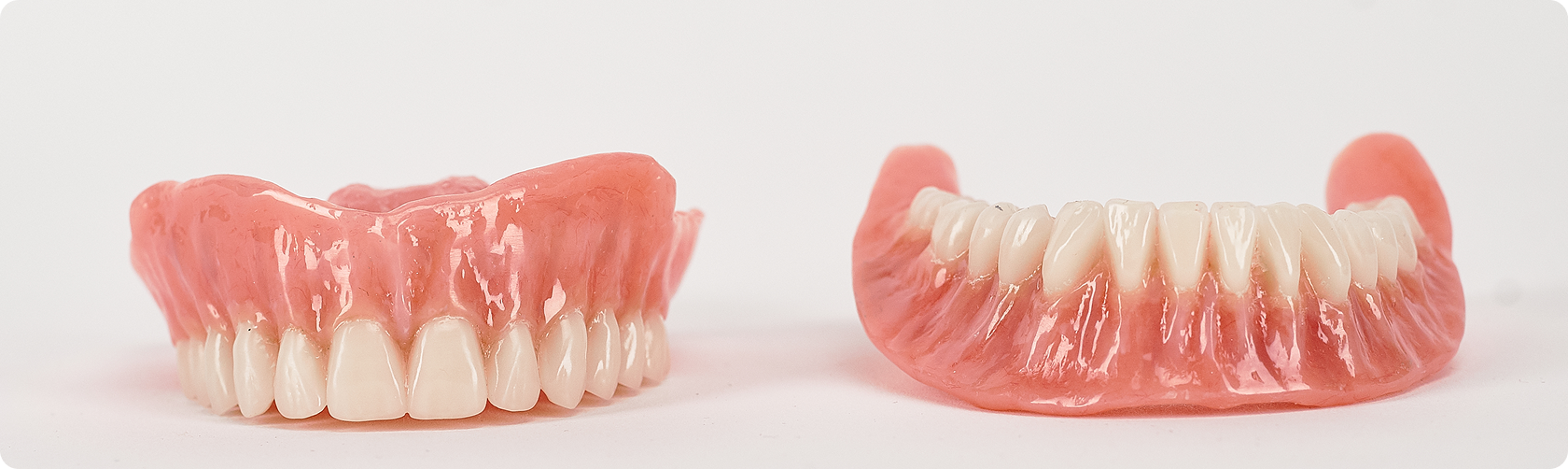
Yedam Smart Dental
Clinic Dentures

Dentures Crafted with
Precise Customization

From partial and complete dentures
to implant-supported dentures,
Based on 30 years of experience treating
elderly patients in the community,
we create dentures that can be used
comfortably for a long time.

Dentures Crafted with Precision Customization

Denture Treatment,
Recommended for
These Individuals

If you're wondering whether you need dentures,
please check the items below first.
After a precise diagnosis at Yedam Smart Dental Clinic,
we will recommend the most suitable method.

  • 01

    Patients who have lost multiple teeth
    and experience difficulty chewing

  • 02

    Patients whose existing dentures
    feel loose or cause recurring discomfort

  • 03

    Patients who are considering dentures
    because full implant treatment feels overwhelming

Conventional
Dentures vs. Implant-Supported Dentures

It is best to consider both retention and
cost when making a decision.
Please refer to the comparison table below,
and after an accurate diagnosis,
we will consult on the most appropriate method.

Partial Dentures Complete Dentures Implant-Supported Dentures
Suitable Cases When some teeth remain When no teeth are present When existing dentures lacked sufficient retention
and caused discomfort
Retention Method Anchored to remaining teeth Retained by gum suction Implants support the denture
Chewing Force Relatively stable Varies depending on gum condition Most stable
Adaptation Period Average Relatively long Relatively short
Partial Dentures
Suitable
Cases
When some teeth remain
Retentio
Method
Anchored to remaining teeth
Chewing
Force
Relatively stable
Adaptation
Period
Average
Complete Dentures
Suitable
Cases
When no teeth are present
Retention
Method
Retained by gum suction
Chewing
Force
Varies depending on gum condition
Adaptation
Period
Relatively long
Implant-Supported Dentures
Suitable
Cases
When existing dentures lacked sufficient retention and caused discomfort
Retention
Method
Implants support the denture
Chewing
Force
Most stable
Adaptation
Period
Relatively short

Yedam Smart Dental Clinic's
Denture Program

Depending on the number of remaining teeth
and the condition of the alveolar bone,
the appropriate type of denture and fabrication
method will vary.
At Yedam Smart Dental Clinic,
after thorough consultation,
we guide
patients to the most suitable method for them.

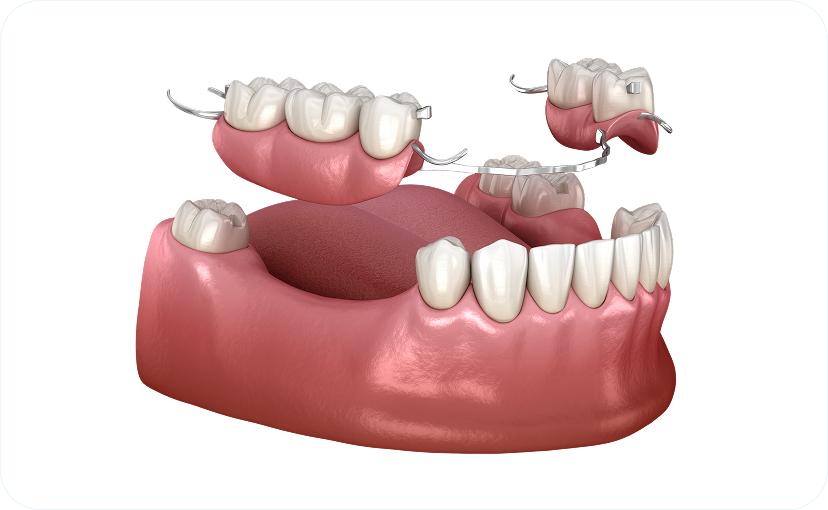
Partial Dentures
01

Partial Dentures

This type of denture is applied when some teeth remain. Because it is fixed to the remaining natural teeth,
it is more stable than a complete denture, and
its removable nature makes hygiene management convenient. Since the design varies depending on the condition and position of the remaining teeth,
precise impression taking is crucial.

#Metal Partial Denture #Resin Partial Denture #Flexible Denture
Complete Denture
02

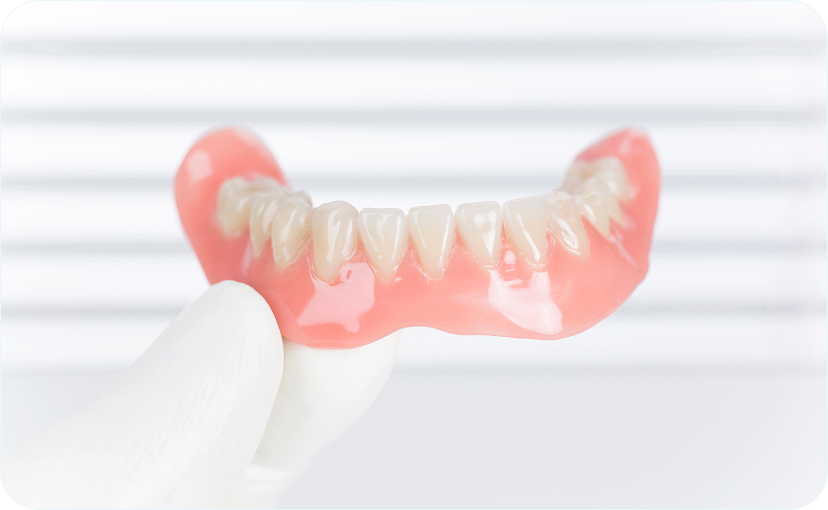
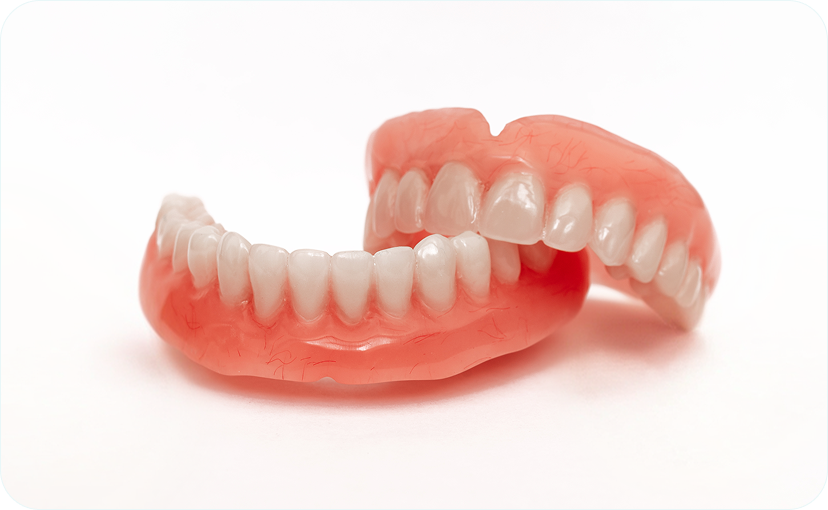
Complete Denture

This type of denture is applied when no teeth remain. Since it is fixed by adhesion to the gums,
the accuracy of the gum impression determines the fit and comfort of the denture. An adjustment period is usually required, and through several adjustments,
we ensure a comfortable fit.

#Maxillary Complete Denture #Mandibular Complete Denture #Simultaneous Fabrication of Maxillary and Mandibular Dentures
Implant-Supported Dentures
03

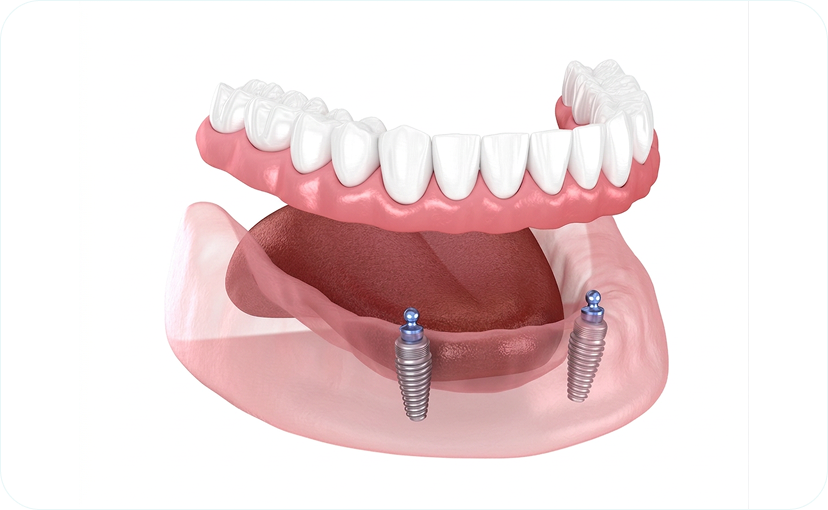
Implant-Supported Dentures

This method involves implants placed in the jawbone
to secure the denture. Compared to conventional dentures, shaking is significantly reduced, and
chewing power is more stably transmitted, greatly reducing discomfort during meals. It is particularly effective for those who found their previous complete dentures unstable, and the cost burden is lower
than full mouth implants.

#Implant-Supported Denture #Overdenture
Reline (Denture Repair)
04

Reline (Denture Repair)

If your existing denture has become loose, it is not always necessary to make a new one.
The alveolar bone changes gradually over time,
and in many cases, the inside of the existing denture
can be reinforced through a reline procedure to refit it. With an in-house dental laboratory, we can process it
on the same day or quickly.

#Reline #Denture Repair #Clasp Adjustment
Partial Dentures
01

Partial Dentures

This type of denture is applied
when some teeth remain.
Because it is fixed to the remaining natural teeth,
it is more stable than a complete denture,
and its removable nature makes
hygiene
management convenient.
Since the design varies depending on
the condition and position of the remaining teeth,
precise impression taking is crucial.

#Metal Partial Denture #Resin Partial Denture #Flexible Denture
Complete Denture
02

Complete Denture

This type of denture is applied when no teeth remain.
Since it is fixed by adhesion to the gums,
the accuracy of the gum impression determines the fit and comfort of the denture.
An adjustment period is usually required,
and through several adjustments,
we ensure a comfortable fit.

#Maxillary Complete Denture #Mandibular Complete Denture #Simultaneous Fabrication of Maxillary
and Mandibular Dentures
Implant-Supported Dentures
03

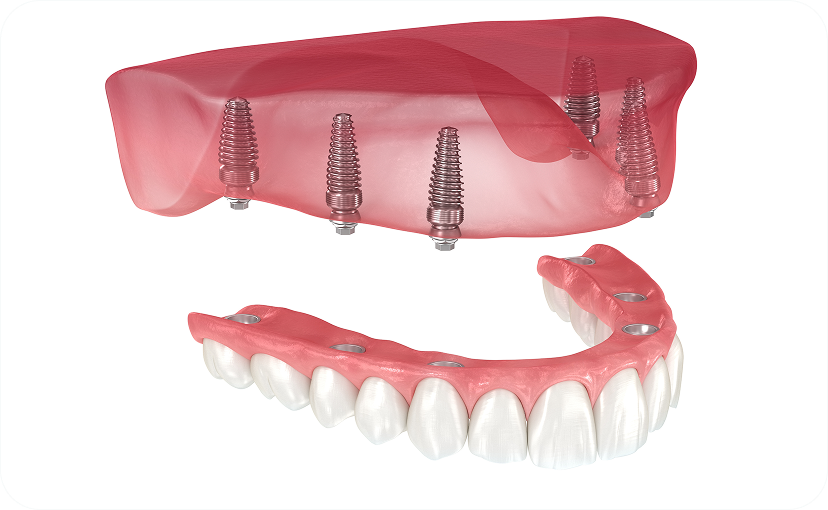
Implant-Supported Dentures

This method involves implants
placed in the jawbone to secure the denture.
Compared to conventional dentures,
shaking is significantly reduced,
and chewing power is more stably transmitted,
greatly reducing discomfort during meals.
It is particularly effective for those who found
their previous complete dentures unstable,
and the cost burden is lower than full mouth implants.

#Implant-Supported Denture #Overdenture
Reline (Denture Repair)
04

Reline (Denture Repair)

If your existing denture has become loose,
it is not always necessary to make a new one.
The alveolar bone changes gradually over time,
and in many cases,
the inside of the existing
denture can be reinforced through
a reline procedure to refit it.
With an in-house dental laboratory,
we can process it on the same day or quickly.

#Reline #Denture Repair #Clasp Adjustment

Yedam Denture Clinical Cases

CASE 01

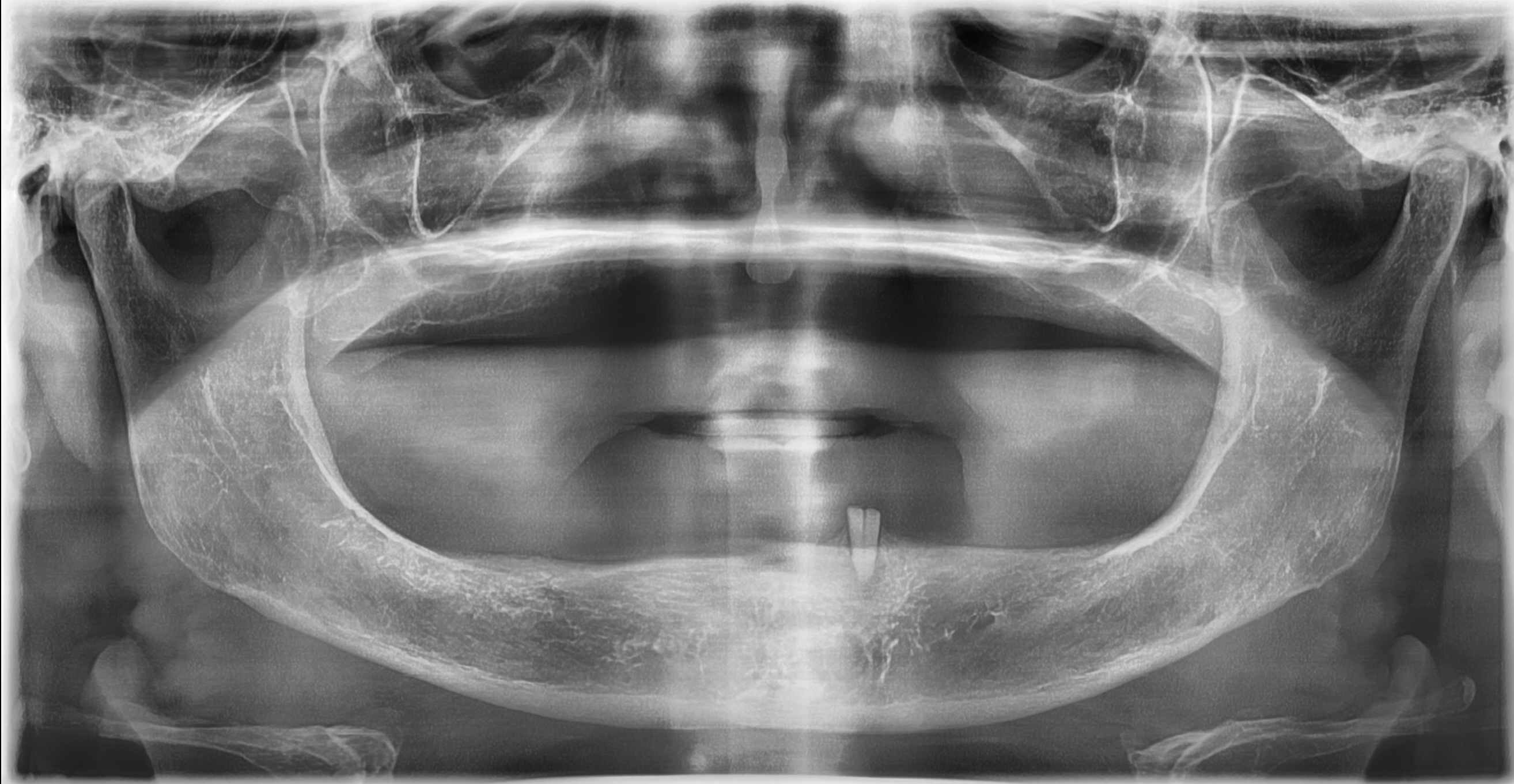
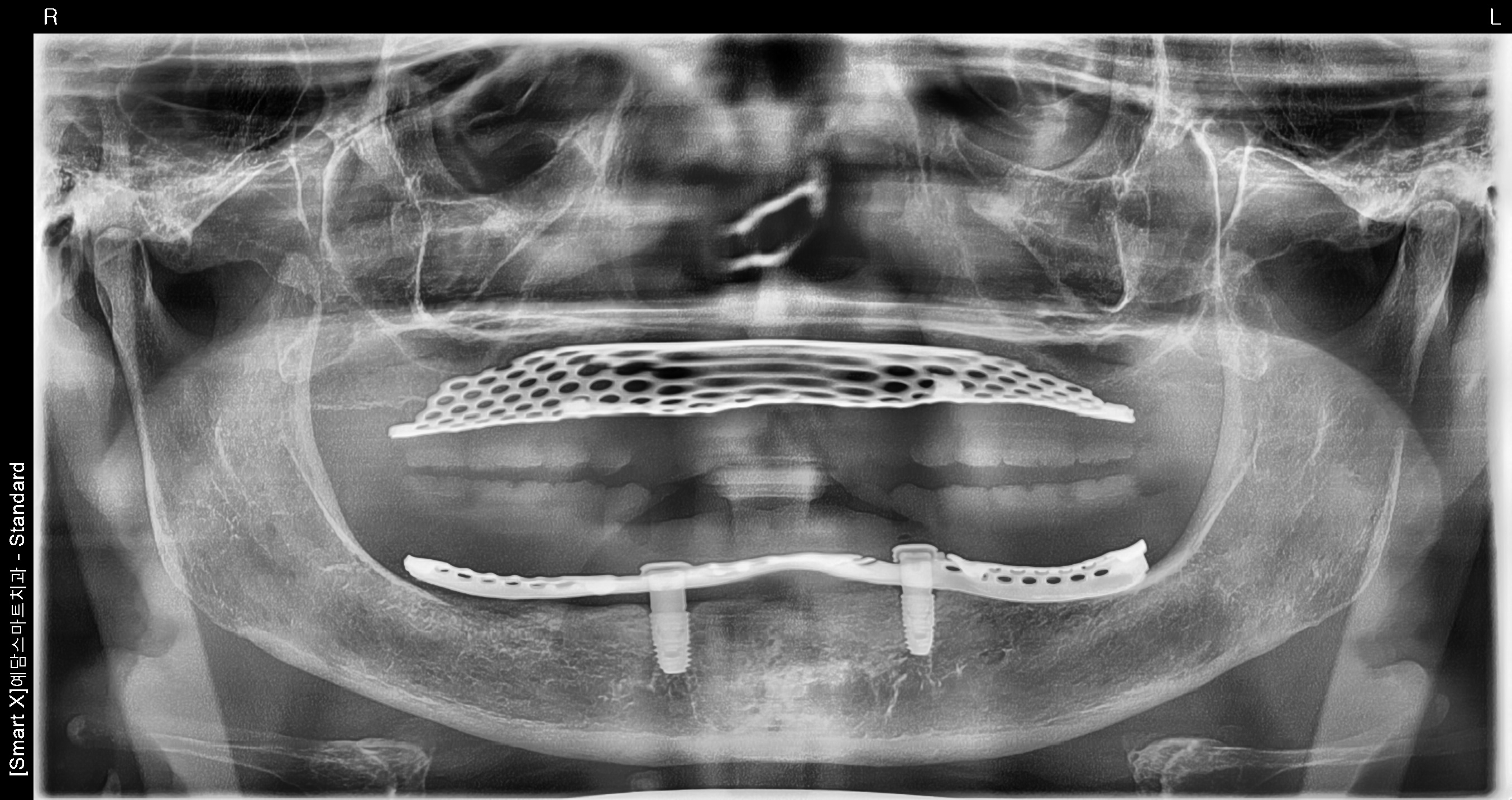
A case in which the entire mouth was restored using full-arch implants in the
upper jaw and implant-supported dentures
in the lower jaw.

Multiple teeth were missing,
and the remaining teeth were also difficult to preserve.
The upper jaw was restored with full-arch implants, while the lower jaw was restored with implant-supported dentures to improve function and aesthetics.

BEFORE Case of full arch implants instead of dentures. Before
Case of full arch implants instead of dentures. After

Before and after cases can be
viewed after logging in.

In accordance with Article 56 of the Medical Service Act,
viewing is available after logging in.
Easy Login →

*This photo is an actual case of a patient treated at our clinic,
posted with their consent.
Treatment results may vary by individual, and accurate
diagnosis and consultation are required.

View Clinical Cases

Please enter a few details to view the cases.

The information you provide will only be used for viewing verification purposes to comply with Article 56 of the Medical Service Act and will not be shared externally.

Why
Yedam Smart Dental Clinic's
Considering Dentures?

Extensive Experience in Senior Dental Care

Extensive Experience in
Senior Dental Care

Having treated senior patients
in the community for 30 years,
we've learned that dentures must not only be
well-made but also comfortable for long-term use.
By carefully observing even the slightest
changes in gum condition,
we create custom dentures tailored to each individual.

Quick Response from In-House Dental Lab

Prompt Service
from Our In-House Dental Lab

With an in-house dental lab,
we can make adjustments or repairs immediately,
without relying on external outsourcing.
You won't have to endure discomfort for long.

An Atmosphere Where You Can Speak Comfortably

Creating an Atmosphere
Where You Can Speak
Comfortably

Having served the community for 30 years,
our principle is to treat senior patients
with warmth and care.
We take the time to consult with you
thoroughly, allowing you to ask questions
and make informed decisions.

We Also Re-evaluate Ill-Fitting Dentures

We also evaluate loose or uncomfortable dentures
and provide appropriate treatment options.

If your existing dentures feel loose or cause recurring discomfort, please feel free to visit
us for a consultation.
After accurately identifying the cause,
we will discuss whether adjustments can
resolve the issue or if a new denture is needed.

Treatment Process

From initial consultation to
post-wearing management,
Yedam Smart Dental Clinic's
denture treatment process involves four stages.

STEP 1

Oral Examination & Consultation

We evaluate the number of remaining teeth
and the condition of the jawbone
to determine which type of denture is
most suitable for you.

STEP 2

Precise Impressions & Design

We take precise impressions of your gum
shape and create a customized design for
a comfortable fit.

STEP 3

Fabrication & Try-In

After precise fabrication in our in-house
dental laboratory,
the denture is tried in the
mouth to evaluate its shape
and occlusion.

STEP 4

Final Placement & Regular Care

After a final evaluation of comfort
and bite alignment, the denture is placed.
Through regular checkups afterward, we
continue to
monitor changes in your gums
and any discomfort
you may experience.

Dentures
Frequently Asked
Questions

  • Q

    What criteria differentiate partial dentures from complete dentures?

    A

    Partial dentures are used when some natural teeth remain. They are anchored to the existing natural teeth, making them relatively more stable than complete dentures. Complete dentures, on the other hand, are used when no teeth remain and are held in place solely by suction with the gums. Therefore, the precision of the gum impression significantly affects the comfort of complete dentures. The appropriate type of denture is determined by comprehensively assessing the number and position of remaining teeth and the condition of the alveolar bone. If there are an ambiguous number of remaining teeth, a consultation may be needed to decide whether to extract them and proceed with complete dentures or maintain them with partial dentures.

  • Q

    How long does it take to adjust to new dentures?

    A

    When first wearing dentures, it's common to experience a foreign body sensation, awkwardness in speech, and changes in chewing sensation. This is a natural process of adapting to a new oral environment. The adjustment period varies depending on the type of denture. Partial dentures, which are anchored to remaining teeth, tend to have a faster adjustment period, while complete dentures, which rely solely on gum suction, generally require a longer adjustment period. In the initial stages of wearing, there may be areas of looseness or pressure, necessitating several adjustment sessions. Through this process, you will gradually achieve comfortable wear.

  • Q

    My dentures keep getting loose. Do I need new ones?

    A

    Loose dentures don't always mean you need a new set. Over time, the jawbone gradually resorbs and changes shape. In many cases, we can adjust your existing dentures to fit your gums again by relining the inner surface. However, if the bone changes are significant or the dentures themselves are severely damaged, relining might not be sufficient, and new dentures may be necessary. We will determine whether relining is possible or if new dentures are needed after diagnosing the current condition of your dentures and the extent of your gum changes.

  • Q

    How do implant-supported dentures differ from full-mouth implant procedures?

    A

    A full-mouth implant procedure involves replacing all missing teeth with implants, whereas implant-supported dentures use a small number of implants to support and stabilize existing dentures. This significantly reduces movement and provides more stable chewing force compared to conventional complete dentures that rely solely on gum suction. However, it is different from replacing every tooth with an implant.

Explore Our Dental Services
at Yedam Smart Dental Clinic

Find everything you need,
from treatment information and consultations
to the latest news from our clinic.