Yedam Smart Dental Clinic Immediate Implants

Extraction and implant placement
completed on the same day

This approach allows implants to be placed
immediately after extraction without waiting for
a separate healing period,
helping to reduce the
overall treatment time and number of visits.
However, immediate implant placement is
not suitable for every patient.

At Yedam Smart Dental Clinic,
we first evaluate the condition of the extraction site,
including bone quality and the presence of infection,
using CBCT imaging. The procedure is performed
only when the necessary conditions are met.

Immediate Implant Photos

Immediate Implants
Recommended for
those who

  • 01

    Need to extract a tooth but want to minimize
    the treatment period as much as possible

  • 02

    Want to reduce the number of clinic visits

  • 03

    Are uncomfortable with a long-lasting
    gap after tooth extraction

  • 04

    Want an accurate diagnosis to determine if immediate implants are suitable for them

Conventional Implants
vs Immediate Implants

The most suitable treatment approach varies depending on your oral condition.
After a thorough examination,
we will recommend the safest and most appropriate treatment option for you.

Conventional Implants
Extraction
and Placement
Performed Separately
Treatment
Period
3-6 months, including bone healing after extraction
Number of
Visits
Relatively More
Feasibility
Generally Possible
Advantages
Stable and Predictable Results
Immediate Implants
Extraction
and Placement
Performed Simultaneously on the Same Day
Treatment
Period
Overall period can be shortened
Number of
Visits
Reduced
Feasibility
Requires checking bone condition and presence of inflammation
Advantages
Shorter treatment time,
fewer dental visits,
and results comparable to conventional implants.
Conventional Implants
Immediate Implants
Performed Separately
Extraction and Placement
Performed Simultaneously on the Same Day
3-6 months, including bone healing after extraction
Treatment Period
Overall period can be shortened
Relatively More
Number of Visits
Reduced
Generally Possible
Feasibility
Requires checking bone condition and presence of inflammation
Stable and Predictable Results
Advantages
Shorter treatment time, fewer dental visits, and results comparable to conventional implants.

Immediate Implant
Procedure

From initial consultation to post-placement care,
Yedam Smart Dental Clinic's implant
procedure consists of four stages.

STEP 1

Precise Diagnosis

Using CBCT and an intraoral scanner,
we accurately assess the condition of
your alveolar bone and remaining teeth.
Based on the diagnostic results,
we provide thorough consultation.

STEP 2

Simultaneous Extraction and Placement

If deemed possible through precise diagnosis,
implants are immediately placed in the same
site after tooth extraction.
The key is to maximize the use of
the remaining
bone structure during extraction
to ensure stable
initial fixation.

STEP 3

Temporary Prosthesis (If needed)

For aesthetically important areas like front teeth,
a temporary prosthesis is placed even before
the final restoration is complete,
to minimize discomfort in daily life.

STEP 4

Final Prosthesis · Regular Maintenance

Once the implant has successfully integrated with the jawbone, the final prosthesis is fabricated and placed.
After adjusting the bite, we provide regular checkups to monitor the implant and maintain its long-term stability.

Why
Yedam Smart Dental Clinic's
Immediate Implants?

We Ensure Safe Treatment Through Precise Preoperative Diagnosis

We Ensure Safe Treatment Through Precise Preoperative Diagnosis.

Immediate implant placement is not suitable for every case.
After carefully evaluating the presence and severity of infection,
as well as
the bone density and thickness using CBCT,
we determine whether the procedure can be performed safely.
If eligibility for immediate implant placement is uncertain, we do not recommend the procedure unnecessarily.

30 Years of Clinical Experience and Expertise

In immediate implant placement, the most important factor is not the materials or equipment,
but the clinical judgment to accurately determine whether a case is suitable for immediate placement.
Drawing on 30 years of experience treating a wide range of cases,
we choose the safest approach without pushing beyond what is appropriate.

Precise Implant Placement
Using Digital Navigation

Because the bone structure after extraction can vary from case to case,
we use digital navigation to precisely monitor the implant position and angle during placement.
The planned placement is verified once more through digital data analysis
to ensure the implants are placed
according
to the treatment plan.

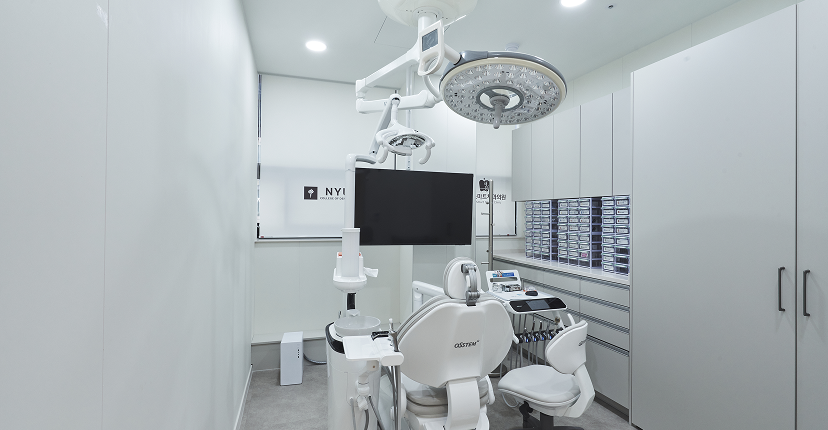
Performed in Comfortable, Private Treatment Rooms

Performed in comfortable, private treatment rooms.

Because extraction and implant placement are performed in a single procedure,
a comfortable treatment environment is especially important.
With a private treatment room structure,
you don't need to worry about others nearby.
All instruments used are sterilized and
managed according to strict hygiene standards.

Immediate Implants
Frequently Asked
Questions

  • Q

    Can an immediate implant be placed even if there is inflammation at the extraction site?

    A

    If there is severe acute inflammation around the tooth that needs to be extracted, it may be more stable to first reduce the inflammation, wait for a certain period of healing after extraction, and then proceed with implant placement in the usual manner rather than performing extraction and implant placement on the same day. Immediate implants are considered when the bone condition at the extraction site is good and the inflammation is not severe, allowing sufficient initial stability to be secured. However, if the inflammation is mild, immediate placement may still be possible after evaluating the condition. Therefore, rather than making a uniform judgment, it is more accurate to determine the approach after a detailed CBCT examination of the extent of inflammation and the bone condition.

  • Q

    Does an immediate implant have a lower success rate than a conventional implant?

    A

    If an immediate implant is performed forcefully when the conditions are not suitable, its stability may be reduced. However, if the bone condition and presence of inflammation are thoroughly checked in advance and the procedure is performed only when the conditions are appropriate, results that are not significantly different from those of conventional implants can be expected. The key is to make the most of the shape of the remaining bone at the time of extraction and secure sufficient initial stability from the beginning of implant placement. This needs to be done properly for the bone and implant to integrate stably afterward. Therefore, the stability of an immediate implant depends less on the method itself and more on the accuracy of the preoperative diagnosis and how carefully the conditions for its application are assessed.

  • Q

    Can I chew food right away on the same day as immediate implant placement?

    A

    In areas that are important for aesthetics, such as the front teeth, a temporary prosthesis may be placed before the final prosthesis is completed to reduce discomfort in daily life. However, this is different from applying strong chewing forces directly, such as on the molars. Immediately after implant placement, it is an important period during which the bone and implant are beginning to integrate, so chewing hard or tough foods right away is not recommended as it may affect implant stability. Even with a temporary prosthesis, it is generally recommended to eat mainly soft foods during the recovery period and gradually increase the amount of chewing force while checking the integration of the bone and implant through regular visits.

  • Q

    Can I find out if an immediate implant is possible through consultation alone?

    A

    Whether an immediate implant is possible is difficult to determine accurately through visual examination or consultation alone, and a detailed examination using CBCT and an intraoral scanner must be performed first. This is because the amount and density of the remaining bone around the tooth scheduled for extraction, as well as the presence and extent of inflammation, need to be checked three-dimensionally to predict the shape of the bone that will remain after extraction and determine whether sufficient initial stability can be secured. For this reason, during the consultation stage, only the general possibility of an immediate implant can be explained, and whether to actually proceed is finally determined after reviewing the results of the detailed examination.

  • Q

    Can the treatment plan change during the process of receiving an immediate implant?

    A

    Even if a detailed preoperative examination determines that an immediate implant is possible, unexpected situations may be found during the actual extraction, such as greater-than-expected bone loss or extensive inflammatory tissue. In such cases, rather than proceeding with immediate placement as originally planned, the treatment plan may be adjusted to first stabilize the extraction site, allow a healing period, and then proceed with the implant in the conventional manner. This is to prevent reduced stability that could occur if immediate placement were forced, and flexibly adjusting the treatment approach based on the actual findings at the time of extraction may be a safer choice for long-term results.

Explore Our Dental Services
at Yedam Smart Dental Clinic

Find everything you need,
from treatment information and consultations
to the latest news from our clinic.